Between Q4 2025 and Q1 2026, MENA startup funding fell 21.5 percent quarter on quarter, landing at $941 million across the quarter — the lowest reading in eighteen months, according to Wamda. In the same window, the inbound enquiry I see from international founders evaluating the UAE as their next fundraising base climbed sharply. The two facts do not contradict each other. They explain each other.
A correction is when sophisticated investors look hardest for what they already wished they had in their portfolio. Capital in the Gulf is not absent in 2026. It is selective. And the founders who treat a UAE entry as “just open an office” walk into a market that prices unpreparedness faster than London or Singapore would.
I work with founders from London, Singapore, Nairobi, and Bangalore who are doing the same calculation: does relocating my company’s centre of gravity to the UAE strengthen my next round? The answer is sometimes yes, often no, and almost never as simple as the set-up consultancy adverts suggest. What follows is the version of this conversation I have repeatedly in our advisory practice — written for a founder who has already built something, and whose existing cap table is not a problem to be discarded.
Why International Founders Are Looking at the UAE in 2026
Three forces are moving founder attention towards the Gulf this year. They are worth naming so you can decide whether they apply to you.
First, capital concentration. MAGNiTT’s 2025 data showed MENA startups raised $3.8 billion across 688 deals, with the UAE alone accounting for the largest share of Q1 2025 deal volume. The number of active institutional and family-office cheques in the region has expanded materially since 2022, even as global venture has cooled.
Second, regulatory and tax positioning. The UAE permits 100 percent foreign ownership across most commercial activities since the 2021 amendment to the Commercial Companies Law. Personal income tax remains zero. Federal corporate tax is 9 percent on profits above AED 375,000, with full exemptions for most qualifying free-zone income.
Third, sovereign-aligned capital. Vision 2030 in Saudi Arabia and the UAE’s own diversification mandate have created sustained tailwinds for fintech, climate, health, and B2B SaaS — sectors where founders from outside the region are landing with relevant product.
None of this means you should raise here. It means the Gulf is a serious option that deserves a serious assessment. The next four sections are how to do that assessment.
Entity Decision: DIFC, ADGM, or Mainland — What Each Costs You at the Term Sheet
This is the question that gets answered fastest and wrongest. Set-up consultancies quote licence costs in five minutes. They will not tell you that the entity choice constrains the share classes you can issue, the option pools you can structure, and the speed at which a future investor’s lawyer accepts your cap table.
For a venture-track business raising institutional rounds, the meaningful contest is between DIFC and ADGM. Both operate under direct application of English common law principles, with their own courts and financial regulators — the DFSA in DIFC, the FSRA in ADGM. Both support priced rounds, SAFEs, convertible notes, drag-along and tag-along rights, and the modern equity-financing instruments your existing investors expect. Both offer SPV regimes useful for layered cap tables.
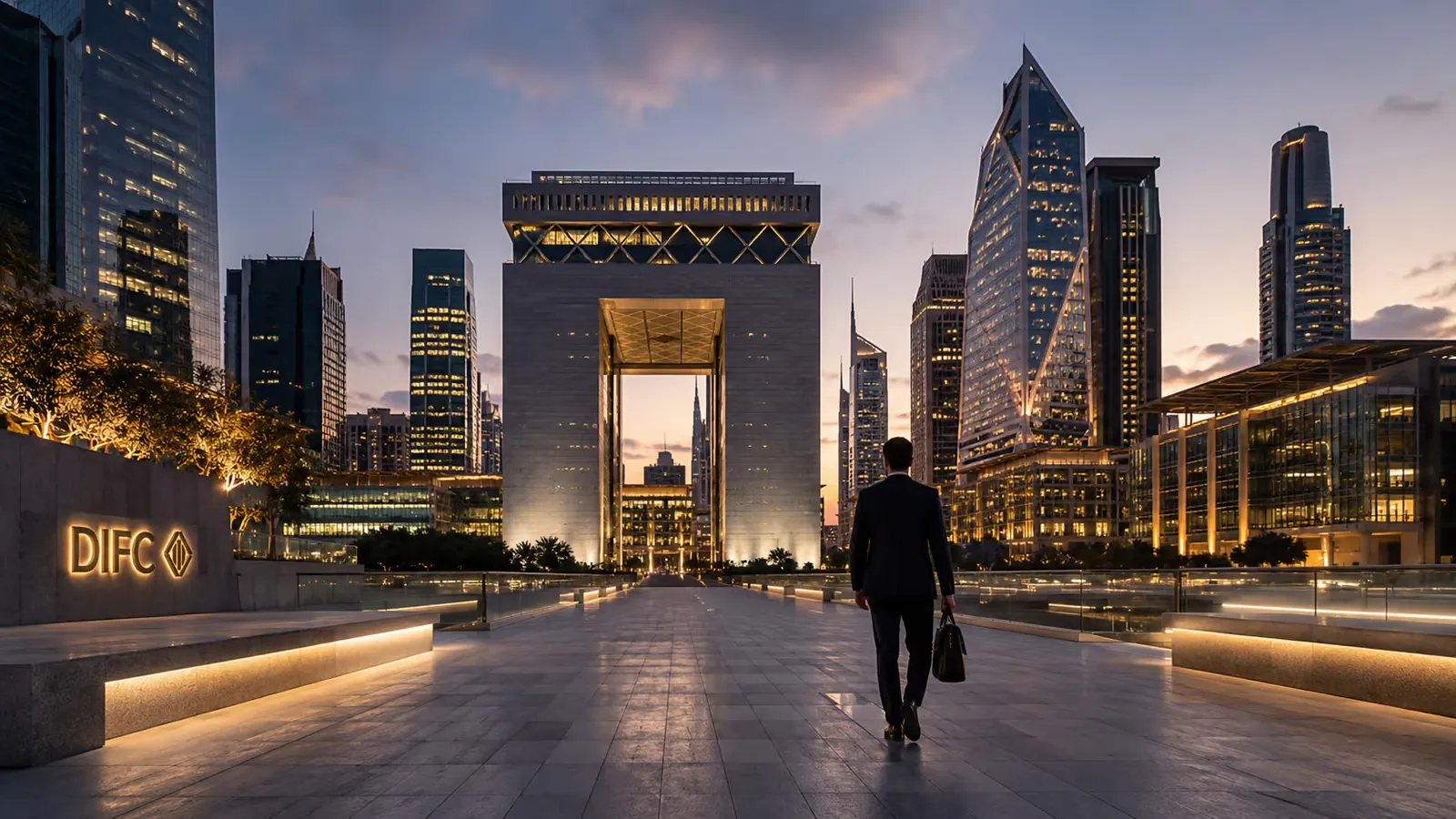
The practical differences matter for incoming founders. ADGM is the cheaper entry, and its SPV regime is the most flexible in the region for stacking entities — useful if your structure already has international holding layers. DIFC is the higher-credibility option for raises destined for international institutional capital: registration runs higher, but the concentration of regional VCs, family offices, and international funds physically present in DIFC means your cap-table jurisdiction reads cleanly to anyone running diligence from London or New York.
Mainland UAE — under the federal Commercial Companies Law — suits businesses where the customer base is local UAE consumers or government clients. It is not the right vehicle for venture-track equity raises. Limited flexibility on share classes and nominal share values means cap tables built on the mainland get rebuilt by your next investor’s counsel. You do not want to discover that during diligence.
The sequencing implication: if you intend to raise from international or Gulf institutional capital within the next twelve months, the entity decision needs to be DIFC or ADGM before you take the round, not after. Restructuring during a live raise burns weeks and credibility.
The 100% Foreign Ownership Question — and Where the Old Rules Still Bite
Foreign ownership is no longer the constraint many incoming founders assume it is. The 2021 amendment removed the historic 51 percent local-partner requirement for most commercial activities on the mainland. Free-zone entities — DIFC, ADGM, and the others — have always permitted full foreign ownership.
The catch is sector-specific. Banking and insurance remain CBUAE-regulated and follow their own licensing pathways. Strategic-impact activities on the Federal Cabinet’s defined list still attract restrictions, and anything touching defence, oil and gas extraction, or certain healthcare sub-segments needs specialist counsel before you commit to an entity structure.
For most software, fintech, and consumer-business founders coming in from outside the region, the foreign-ownership question is a non-issue at the cap-table level. The real questions are which regulator your business sits under (CBUAE, CMA/formerly SCA, DFSA, or FSRA) and how each regime prices the compliance overhead into your operating model. Most founders underestimate this. Our step-by-step UAE fundraising guide walks through the regulator-by-regulator landscape if you need the deeper read.
Investor Access: Relationships Matter More Than Cold Outreach
The single most consistent mistake I see incoming founders make is assuming UAE investor access works the way it works in their home market. It does not.
In London or Singapore, a strong product and a clean deck will get you cold-outreach meetings with reasonable conversion. In the Gulf, the same approach will absorb six months and produce a thin pipeline. Family-office capital — which still dominates the private-market cheque register across Dubai, Riyadh, and Abu Dhabi — operates on relationship trust. Institutional VCs in the region weight warm introductions heavily. Sovereign-aligned funds will rarely take a meeting that did not come through a named referrer.
The implication is not that you cannot raise here. It is that the sequencing has to invert. Before you build the deck for Gulf investors, you build the relationship surface area: typically three to four months of presence, regional advisor relationships, and anchor-investor conversations that may not lead anywhere directly but that build the warm-path map. Then you pitch.
Founders who run the order in the other direction (pitch first, network second) typically discover six months in that the round they expected to close in twelve weeks is still open. The Investor Readiness Scorecard includes an investor-targeting dimension that surfaces this gap quickly; our 5-pillar framework covers it in more depth. The Investor Readiness Sprint is built for founders who treat this as real work rather than an afterthought.
The Golden Visa Angle — Useful, Not Essential
The UAE Golden Visa for entrepreneurs and investors gets disproportionate attention in the consultancy literature. In practice, it matters less than the entity decision and the investor-access work. It removes the operational friction of frequent renewals and signals long-term commitment — both of which Gulf investors read positively. It does not replace any of the work in the other sections of this piece. You can run a successful raise from a UAE-registered DIFC entity without holding a Golden Visa; you cannot run one from a cap table investors will not accept, regardless of which visa you hold. Treat the Golden Visa as a useful adjacent step once the core decisions are made, not as the headline.
Timing Your Entry: GITEX, FII, and the Capital Cycle
Two regional events anchor the Gulf capital cycle. GITEX Global in Dubai, October each year, is the largest concentration of tech, sovereign, and investor activity in the region. The Future Investment Initiative in Riyadh, also in October, is the highest-density gathering of institutional and sovereign capital you will find in a single week anywhere in MENA.
The practical implication: capital-allocation conversations in the Gulf cluster in two windows, September to November and February to April. If you intend to be raising in 2026, the September window is closer than it looks. Arriving in August with the entity, cap table, and warm-path map already in place is materially better than landing in October and trying to compress three months of relationship work into two weeks.
Our GCC Fundraising Snapshot — the same regional dataset we use in our practice to size opportunity for incoming founders — covers sector splits, regional cheque sizes, and the year-on-year direction. It sits alongside the Investor Readiness Scorecard in our resource library, and it is the right reference to pressure-test whether your timing works for your specific raise before you commit operating decisions to it.
What to Get Right Before You Land — A Sequenced 90-Day View
If you have read this far and decided the UAE is real for your next raise, here is the sequencing I run with founders in our practice. Before any of it, get a baseline read: fifteen minutes with the Investor Readiness Scorecard maps you against fifteen readiness dimensions across four categories, and the gaps it surfaces are the ones an unfamiliar market punishes first.
Months one to two, while you are still primarily in your home market: choose the entity jurisdiction with future-investor counsel input. Build the cap-table structure that survives Gulf and international diligence. Map the regulator your business will sit under. Begin investor-list research using regional intelligence, not generic lists.
Month three, beginning to spend material time on the ground: open conversations with two or three regional advisors who can introduce you into specific investor circles. Take meetings without pitching — relationship calibration first. Walk the DIFC and ADGM ecosystems in person if relevant to your entity choice. By the end of this month, you should have a warm-path investor map of roughly 30 to 50 named institutions, not a generic list of 200.
From month four onwards, when you actually open the raise: the readiness work is done, your data room is investor-grade, your model is unit-economics-tight, your warm-paths are warm. This is the founder Gulf investors back. Not the one who flew in last week.
The Investor Readiness Sprint can compress the materials build: the defined deck, model, cap-table scenario, and founder narrative for AED 25,000 in 2–3 weeks from complete intake. It does not fix legal or financial issues, build the investor pipeline, or sequence Fiducia-led outreach. The product stands alone; paid fees are eligible for the optional 90-day raise-mandate credit. Credited only if we take the raise mandate.
Dubai is where the cap table resets. Make sure yours is ready for it.